
Book review: The Brass Band Hall of Fame
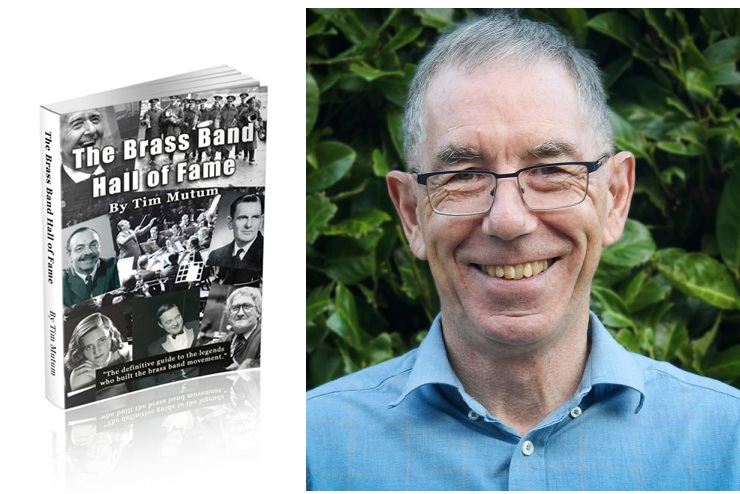
Author: Tim Mutum
Price: £14.99
Available from: http://www.amazon.co.uk/

With a few notable exceptions, the general public knows very little about the vast majority of figures that have helped shape the artistic development of the brass band movement over the last century and a half.
Sepia tinted photographs hung on band room walls or black and white pictures cut from newspapers offer little more than a snapshot in time, the lives of those captured on camera long forgotten by passing generations who only occasionally glimpse at them through dusty glass or fragile scrapbooks.
Many welcome histories of local bands and biographies have been published over the years (from Joseph Hampson’s book on Besses o’th’ Barn in the 1890s to Dr Timothy Thirst’s ‘James Ord Hume - The March King’ in 2006), but they remain varied in scope, quality and availability. Elsewhere, academic publications have tended to concentrate on wider cultural and social seams of research.
Inquisitive passion
For many years Tim Mutum’s inquisitive passion for brass banding has provided an invaluable bridge that has brought an all too easily forgotten history back to life through his own academic approach to cataloguing recordings (Egon: 1991) to numerous detailed contributions to books and publications.
Tim Mutum’s inquisitive passion for brass banding has provided an invaluable bridge that has brought an all too easily forgotten history back to life
His latest is an eclectic ‘Hall of Fame’ selection of close on 140 figures – conductors, composers, players and influential personalities who have left their mark on the global movement, some more lasting than others, but all significant in their own way.
It is very much a personal appreciation of those who have driven the amalgam of constituent parts forward over the last 175 years or so (or in many cases, helped them survive) – from Bernard Adams to Frank Wright, Jean Baptiste Arban to James Watson, the Distin family to Vaughan Morris, Eric Ball to Gilbert Vinter.
Defining
In that respect, this engagingly written reference book is a defining rather than definitive guide; the compact alphabetically listed ‘obituaries’ adding flesh to the driest ossuary bones, the more substantive entries illuminating the essential DNA reference points of their subject’s body of banding fame.
Arguments will be made for many who are missing, whilst the inclusion of only three women is arguably indicative of the movement’s historical attitudes rather than current ones.
It sees the Mortimers and the Victorian triumvirate of Owen, Gladney and Swift joined by the likes of Leonard Lamb and Don Morrison, whilst Edward Elgar and John Ireland share space with George Hespe and Henry Round. The Black Dyke duo of John Paley and Maurice Murphy nestle on a cornet bench with the antipodeans of Arthur Stender and Ken Smith.
Arguments will be made for many who are missing, whilst the inclusion of only three women is arguably indicative of the movement’s historical attitudes rather than current ones.
You suspect the author could well fill another volume and more. You also hope that he does.
Iwan Fox