
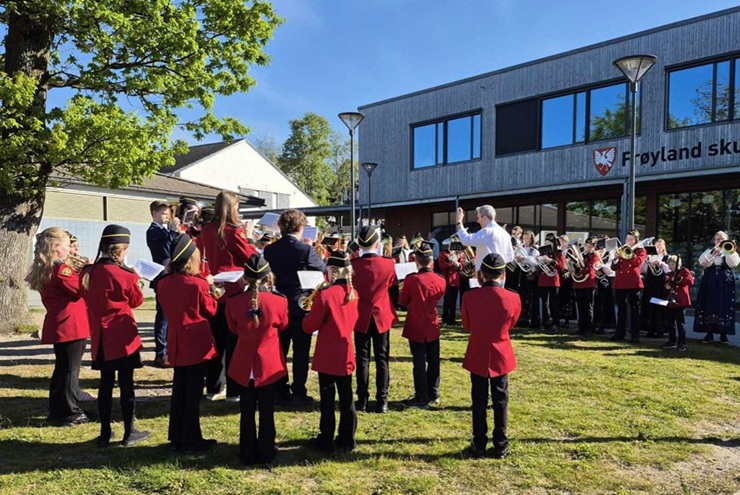
A remarkable success story of long-term investment in the development of future generations of brass band players has blossomed in the Frøyland and Kvernaland area of Time Kommune of Rogaland in Norway.
The Time Municipality is only the 67th most populous municipality in the country with a population of around 21,000, and is predominately an area of agriculture. In recent times it has been more famous for producing footballer Erling Haaland rather than brass band players.
Recruitment strategy
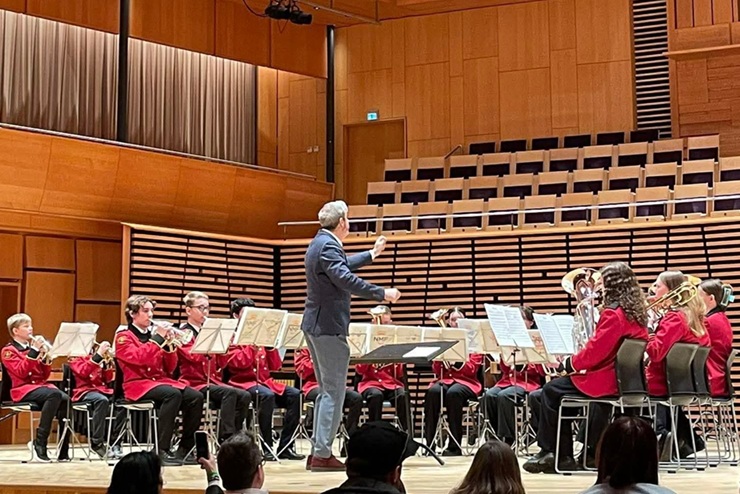
However, following a sustained 12-year recruitment strategy that has changed - and has helped transform participation levels. This has been centred on Frøyland Skulekorps which has grown from just seven members in 2014 to more than 74 players today, alongside wider development across the local banding community.
In turn this has seen the emergence of Kvernaland Brass Band, which has grown directly from the success of the youth programme where innovative recruitment initiatives, strong educational pathways and a clear focus on community identity have steadily transformed participation levels.
Growth has never been about a single recruitment campaign. It's been about building a culture where children feel included, valued and successful from the moment they join
Building a culture
Former Stavanger Brass Band solo horn player and Time Kulturskule band leader Arfon Owen has overseen much of the development, and he told 4BR: “Growth has never been about a single recruitment campaign. It's been about building a culture where children feel included, valued and successful from the moment they join.”
Innovative
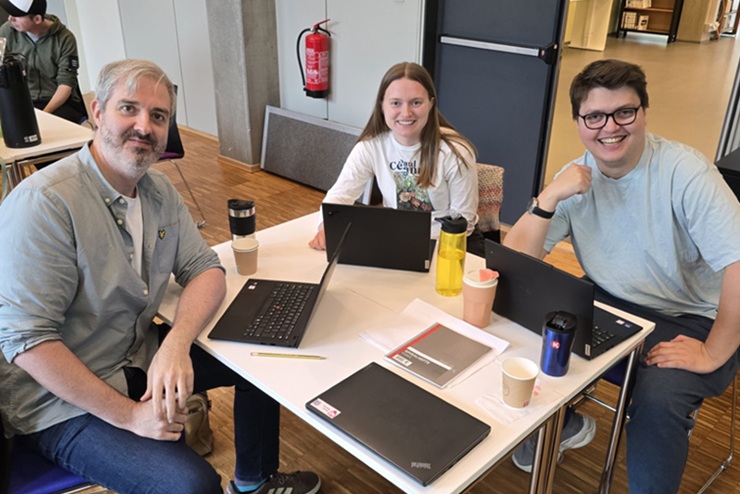
Fellow Time Kulturskule teachers Ragnhild Kristine Midtbø and Tord-Viljar Husebø (below with Arfon - left) have also played central roles in developing the band's aspirant and junior programmes, helping create a clear pathway from beginner level through to senior performance.
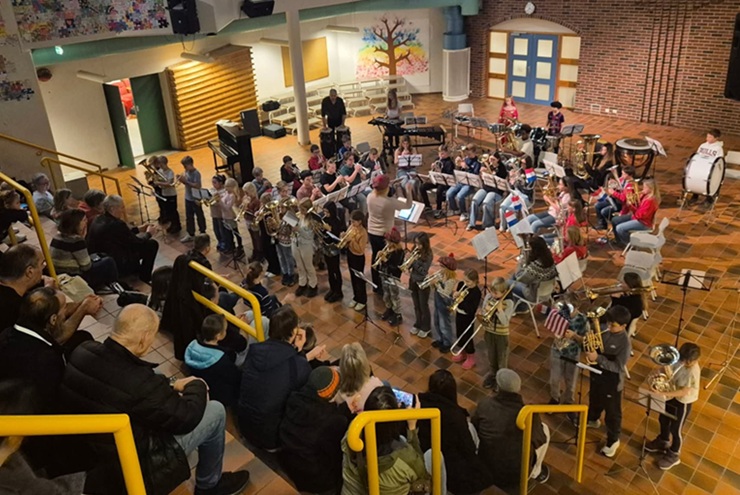
The long-term strategy has combined traditional recruitment with innovative introductory projects, with closer links with local schools and a strong public presence throughout the community.
The long-term strategy has combined traditional recruitment with innovative introductory projects, with closer links with local schools and a strong public presence throughout the community.
Over time, the band has developed a reputation for inclusion, musical achievement and positive social experiences, helping attract both new players and supportive families.
Community visibility
Arfon added: “Community visibility has also been a major factor. Regular appearances at local events, national day celebrations, concerts and competitions have helped make brass banding a recognised and valued part of village life.”
The impact is now being seen across the municipality.
Community visibility has also been a major factor. Regular appearances at local events, national day celebrations, concerts and competitions have helped make brass banding a recognised and valued part of village life.
Lye Skulekorps has also enjoyed substantial growth during the same period, while Rosseland Skolekorps continues to develop under the direction of Tord-Viljar Husebø. Meanwhile, Bryne Skulekorps remains one of the municipality's strongest ensembles under conductor Victor Molodozhan, another member of the Time Kulturskule brass department.
Close cooperation
Arfon revealed that the close cooperation between the various organisations has helped foster a wider sense of belonging among young musicians, with regular collaborative projects, concerts and shared initiatives strengthening the local banding environment.
The progress has also been reflected in contest results. Last year Frøyland Skulekorps returned to the Norwegian National School Band Championships for the first time in 13 years, securing a podium finish in the 4th Division.
Older generation
However, Arfon also says that perhaps the clearest sign of the area's renewed banding health has come away from the youth movement itself.
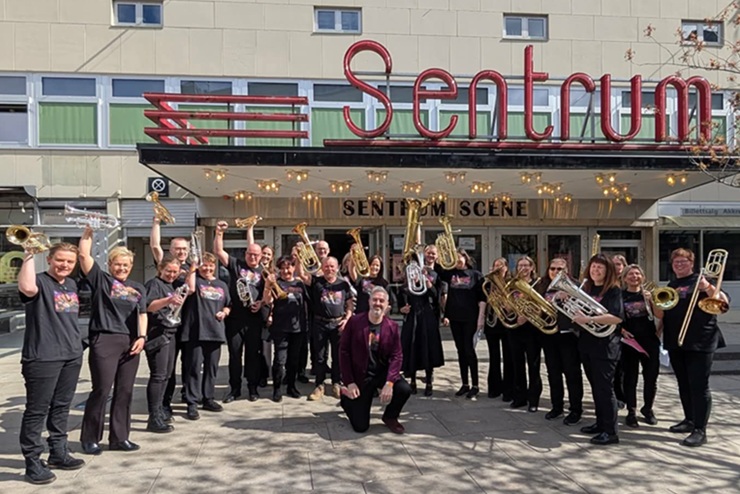
Earlier this year the band claimed first place in its section at the Oslo Brass Festival, highlighting how the momentum created through youth recruitment is now feeding directly into adult participation
“Inspired by their children's involvement, parents and guardians established Kvernaland Brass Band three years ago. What began with just five adults has since developed into an ensemble of around 30 members, bringing together complete beginners and former players returning to brass banding after decades away.
Earlier this year the band claimed first place in its section at the Oslo Brass Festival, highlighting how the momentum created through youth recruitment is now feeding directly into adult participation.”
Collective effort
For Owen, however, the real success lies beyond membership figures and contest performances.
"This has been a collective effort involving teachers, volunteers, committees and families over many years," he said.
"We've worked hard to create an identity that promotes inclusion, enjoyment and achievement, and that has helped make brass banding part of everyday community life again."
We've worked hard to create an identity that promotes inclusion, enjoyment and achievement, and that has helped make brass banding part of everyday community life again
Shared secrets
At a time when many organisations across Europe continue to face recruitment challenges, the experience of Frøyland and Kvernaland offers a compelling example of how long-term vision, innovative recruitment and strong community partnerships can help create a sustainable future for brass banding.
Arfon may well be fielding e-mails and telephone calls from across the banding world to ask him to share the secret of his success.
“I would welcome that,” he said. “Just think what the future of the brass band movement would be like if this success is replicated time and time again.”
Iwan Fox