

It is now almost a century since ‘A Moorside Suite’ was used as the test-piece at the National Championships. Holst’s work ushered in what many people still refer to as the ‘Golden Era’ of brass band compositions by the likes of Ireland, Bantock, Elgar, Howells, and Bliss.
At the time it seemed to confirm the long held ambition of Herbert Whiteley, editor of The British Bandsman that; “We wish to see our brass bands take their rightful place in the musical life of the country, and to stop the taunts which are continually flung at them.”
It was a pipeline of creativity whose flow was only stopped by the outbreak of the Second World War.
Musical retreat
What happened thereafter has been well documented. Celebrations were followed by stagnation as the movement began a slow but inexorable musical retreat behind the confines of its contesting boundaries. As Geoffrey Brand once said: “We play music that serves a purpose. That’s it.”
Despite the occasional spasm of outrage (‘Spectrum’, ‘Fireworks’ etc) we found succor in familiarity, whilst the outside world gradually lost interest in what we had to offer. A gap opened between our perception and everybody else’s reality.
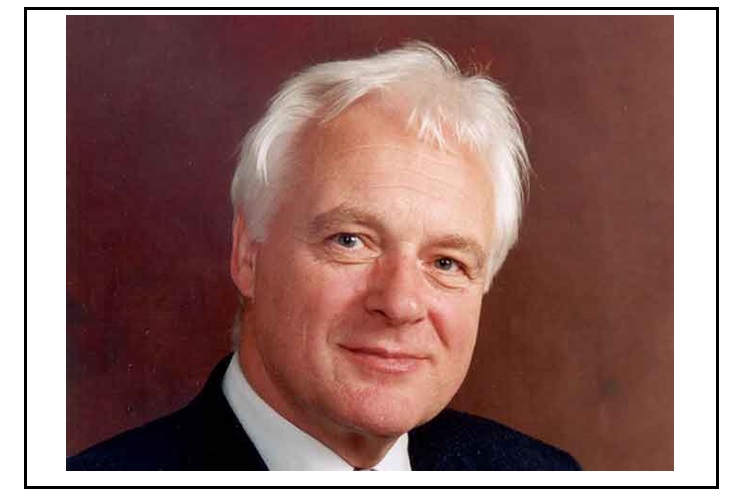
Hopes of bridging what had become a growing chasm briefly flourished in the mid to late 1970s with the adventurism of Elgar Howarth and the orchestral polish of Howard Snell.
Hopes of bridging what had become a growing chasm briefly flourished in the mid to late 1970s with the adventurism of Elgar Howarth (below) and the orchestral polish of Howard Snell. Exciting explorations from Birtwistle, Henze, Patterson, Simpson, Wilson, McCabe and others were broadcast regularly thanks to James Langley at the BBC.
Turned inwards
All too soon however it dissipated, as our inherent competitive desires overtook aesthetic musical ambitions. Once again we turned inward, inquisitiveness and invention eventually replaced by the manufactured homogeny of formulaic throw-away ‘blockbusters’ which were only to be heard with any repeated regularity (if at all) within the confines of the contest hall.
It also led to the myopic opinion that we were simply musically misunderstood; a form of ‘inverted snobbery’ placed on the value of our contest music which some believe deserves to be regarded as a second ‘Golden Era’ of compositional craftsmanship worthy of Holst and Howells, let alone Heaton, McCabe, Gregson, Sparke et al.
It also led to the myopic opinion that we were simply musically misunderstood; a form of ‘inverted snobbery’ placed on the value of our contest music which we believed deserves to be regarded as a second ‘Golden Era’ of compositional craftsmanship
Opposite view
Those who have looked in from the outside though can quickly come to an entirely opposite view. And whilst a number of articles written about the medium of late have been badly researched and ill-informed, they still hold a kernel of undeniable musical truth. We are, as Geoffrey Brand long ago alluded to, performing music to and for ourselves.
That may well come under further scrutiny over the next few months as brass banding builds on one of its occasional cyclical upturns in the wider public consciousness. It is certainly not due to being musically relevant because we live stream contests performing an endless diet of virtuosic acrobatics to ourselves.
Last time and new time
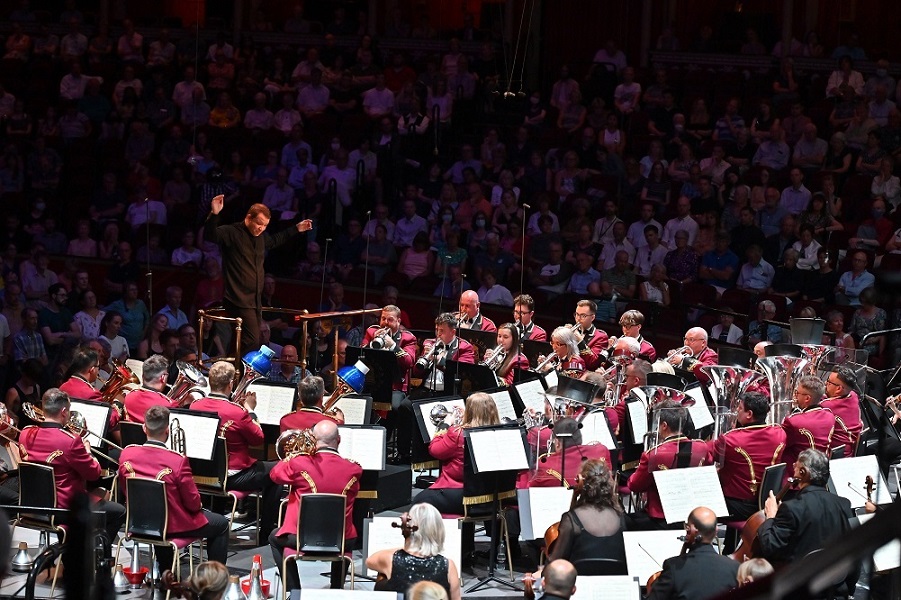
Arguably the last time we gained wider national recognition was when Tredegar Band made a double appearance at the 2022 Proms – the first with the National Orchestra of Wales with a performance of Gavin Higgins’ ‘Concerto Grosso for Brass Band and Orchestra' and then with their own ‘Late Night’ appearance on the same weekend.
Interestingly, the recording of the work is to be released later this year. Its reception with the wider musical world may well be telling.
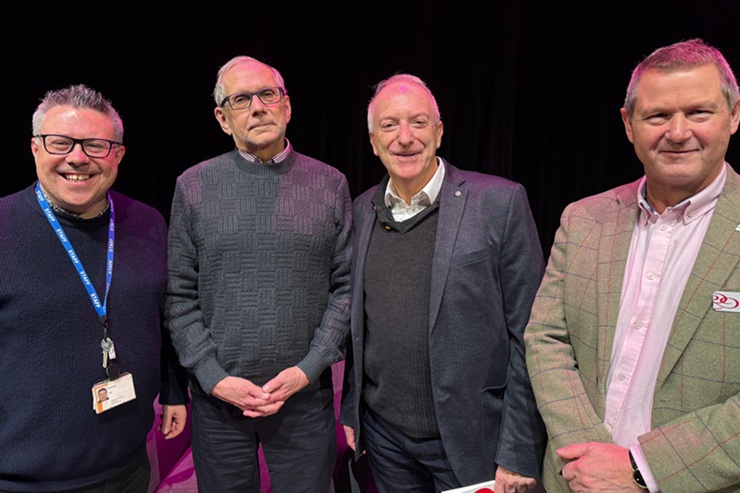
RNCM Festival spotlights for Sparke and Blackford (alongside David Thornton and Antony Smith of Nimbus Publishing)
Orbital importance
It could also reinforce the encouraging acclaim given to Richard Blackford’s ‘Orbital’.
Premiered by Cory Band at the 2026 RNCM International Brass Band Festival it is arguably one of the most important original works written for the medium in the past decade or more, whether the insular brass banding world immediately thinks so or not.
With a series of further performances already secured, and with the backing of Nimbus Publications, its profile is sure to be noted way from the usual confines of the contesting environment in coming months.
With a series of further performances already secured, and with the backing of Nimbus Publications, its profile is sure to be noted way from the usual confines of the contesting environment in coming months.
High profile associations
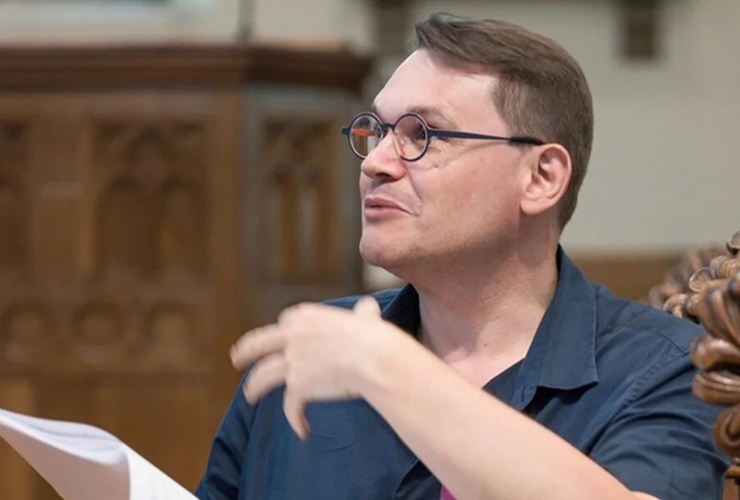
High-profile associations initiated by composer Paul Mealor (below) and conductor John Wilson have also helped in bridging a greater understanding for our serious musical explorations. They are now the new keyholders to opening the doors to greater broadcast coverage of original brass band music on the BBC and wider media platforms.
Long term advocates
Both have carried on the advocacy long spearheaded by the likes of Edward Gregson and Paul Hindmarsh who tirelessly presented the case for more high quality brass band output on the BBC and other outlets for many years.
They could never openly be considered as members of the revolutionary vanguard, but without them we would have been completely cut adrift in recent years.
Gregson’s success with both his orchestral and brass band works has arguably been deserving of even greater coverage by the BBC, whilst Paul Hindmarsh has been the quiet commissioning champion for the medium, whose influence has been far greater than he would ever modestly admit to.
Gregson’s success with both his orchestral and brass band works has arguably been deserving of even greater coverage by the BBC, whilst Paul Hindmarsh has been the quiet commissioning champion for the medium
They have championed through broadcast and recording the likes of works by Orr, Patterson, Musgrave, Heaton and many others, brought insight and understanding to many wider festivals (Gregson’s 'French Horn Concerto' for example) and beat the drum for our musical inclusion on the most important stages.
Jackson door
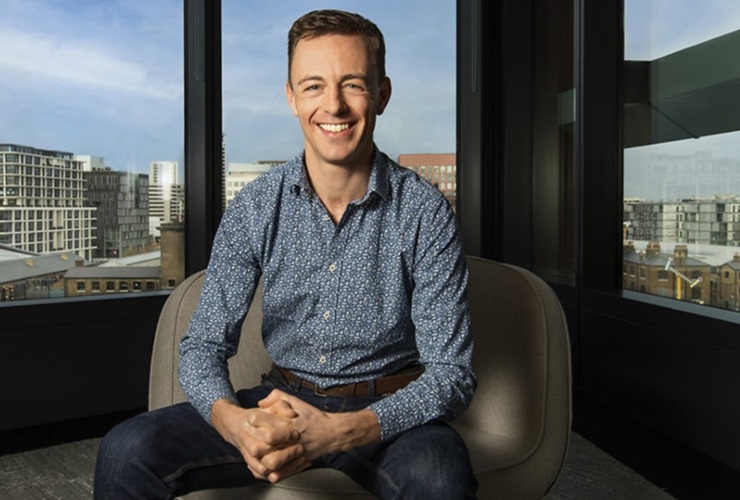
Now, we have champions in Mealor and Wilson who also have the same level of respect within the corridors of Radio 3 in particular. Its Controller (and that of The Proms) Sam Jackson (above) is also well known in signaling his desire to open new doors for the station and its annual Albert Hall concert series.
We have already heard that with the Radio 3 series ‘Brass Band with Hannah Peel’, which although quirkily uneven in outlook, certainly made its mark on the wider listening public. It could be about time that his influence is also felt to our benefit once again at the Royal Albert Hall.
It could be about time that his influence is also felt to our benefit once again at the Royal Albert Hall.
Acclaim
Mealor’s own well established commitment to the banding world has been further cemented with his progressive curation as Artistic Director of the St Asaph Festival, which in 2025 saw the world premiere of his major brass band work, ‘Tranquil Abiding’. It was later performed to widespread critical acclaim at the 2027 RNCM International Brass Band Festival.
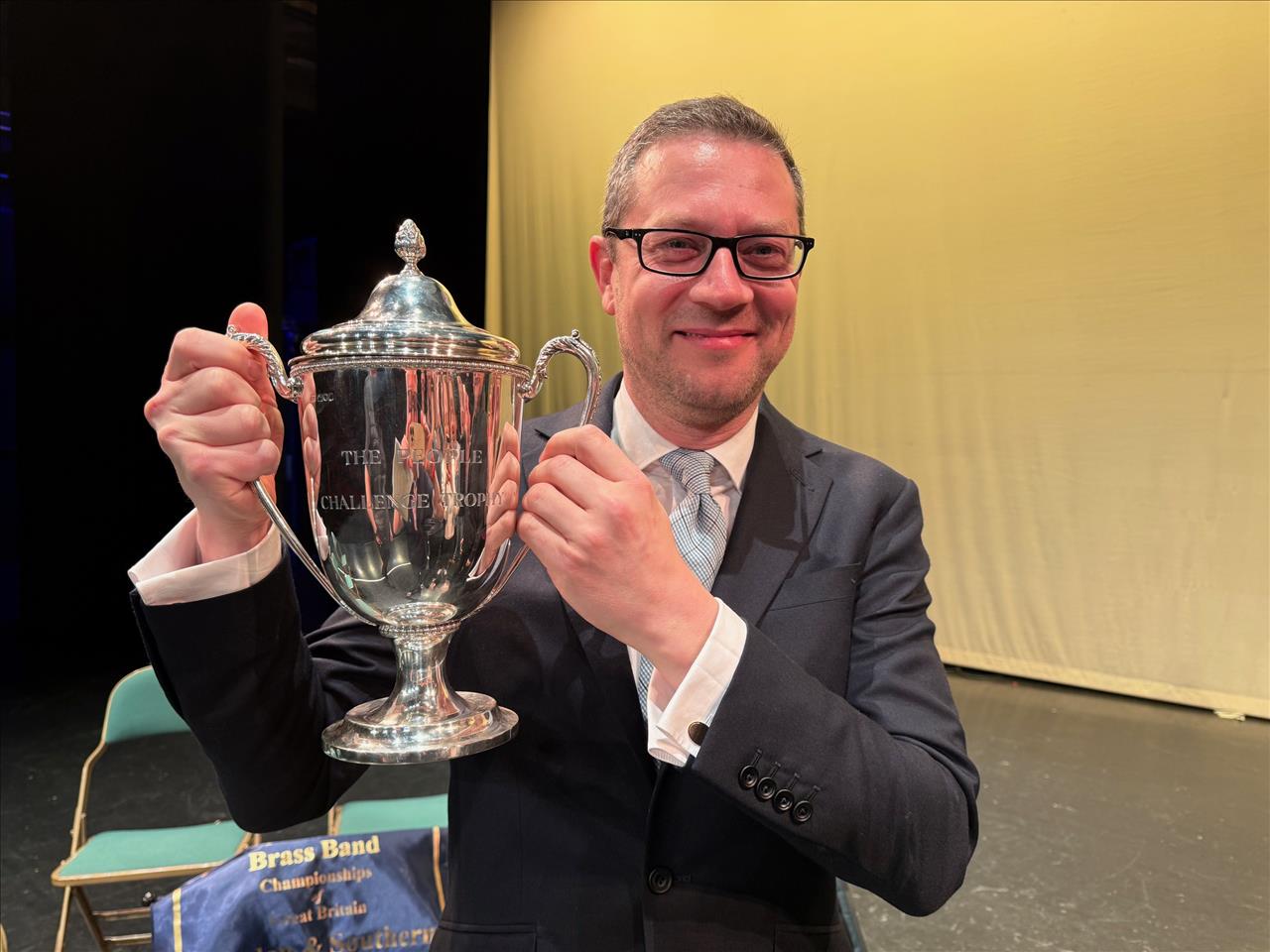
And whilst there was something of a curiosity factor at play in the interest surrounding John Wilson’s appearance conducting Zone One Brass (above) at the recent Regional Championships, his direction of Black Dyke Band on its ‘Bliss’ CD release was marked in more ways than one.
Support
Now we need to support them and their musical outlook - be it through high profile performance opportunities or political pressure (there are hopes that a new All Party Parliamentary Group will soon be set up), recordings, broadcasts and plenty of evangelical advocacy to the purse string providers at the various Arts Councils.
Encouraging
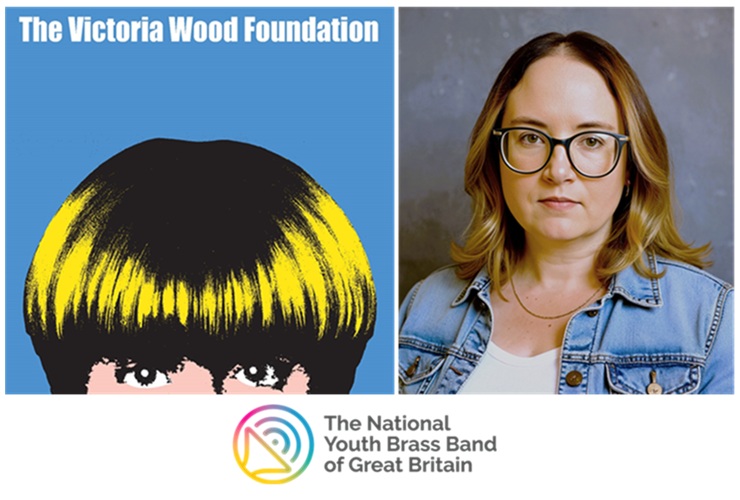
Encouragingly, lasting marks have been made of late: The RNCM International Brass Band Festival continues to retain BBC coverage (limited but still important) at a time when cut-backs are being made to output elsewhere, whilst other festivals are showing increased interest in including performances of original brass band music in their programming. There has been a great amount of media interest in the National Youth Brass Band of Great Britain's world premiere of a work commisioned by the Victoria Wood Foundation and written by Andrea Price.
There has been a great amount of media interest in the National Youth Brass Band of Great Britain's world premiere of a work commisioned by the Victoria Wood Foundation and written by Andrea Price.
2026 is also the year of Philip Sparke – perhaps the movement’s most popular composer, whose original output also deserves wider recognition. There are also signs that bands at all levels are willing to showcase other less established writers, especially female composers who have been so obviously underrepresented.
Opportunities to champion what we do musically to the wider world are rare occurrences, so when this one comes along, we should make sure we don’t let it slip through our collective grasp.
Iwan Fox